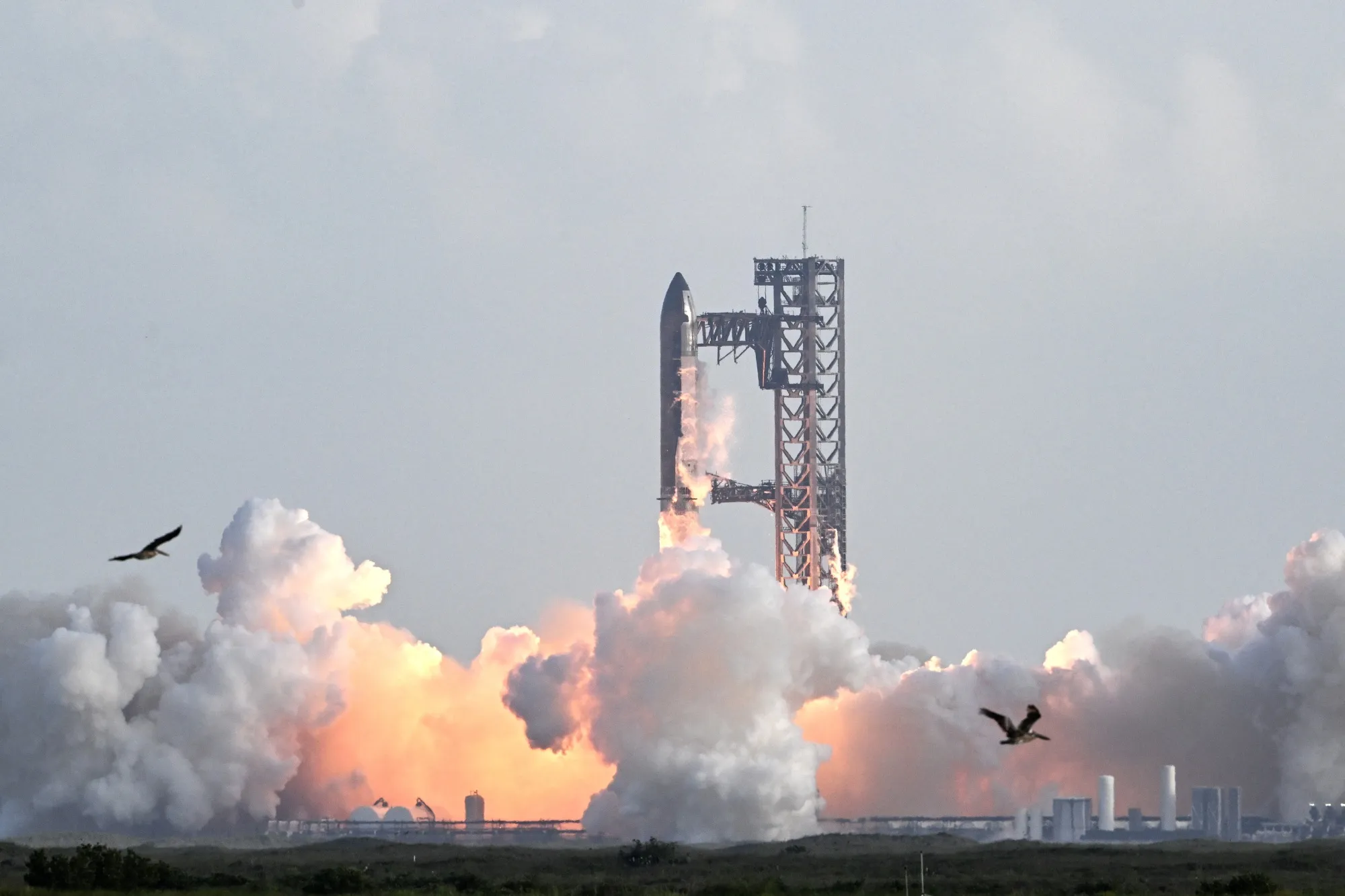
The global space industry is entering a new era of exploration as next-generation rockets and technologies accelerate humanity’s ambitions beyond Earth.
One of the most ambitious projects currently underway is Starship, a massive reusable rocket system being developed by SpaceX. The rocket is designed to carry both cargo and crew to destinations such as the Moon, Mars, and deep space missions.
According to recent updates from the company, new test flights are expected as engineers continue refining the spacecraft's design and propulsion systems. The goal is to make the rocket fully reusable, dramatically lowering the cost of space travel and enabling more frequent missions.
Space experts believe that such developments could revolutionize the global space industry. The Starship rocket is currently the most powerful launch vehicle ever built, capable of carrying enormous payloads into orbit and beyond.
Beyond commercial opportunities, the technology could also support international space agencies in building lunar bases and eventually sending humans to Mars. Programs like NASA’s Artemis missions aim to return astronauts to the Moon and prepare for longer interplanetary journeys.
In addition, satellite deployment, space tourism, and planetary research are expected to grow rapidly over the next decade. Experts predict the global space economy could reach trillions of dollars as both governments and private companies continue investing heavily in space infrastructure.
While challenges such as safety, funding, and technological complexity remain, the pace of innovation suggests that humanity may soon enter a new chapter of space exploration.