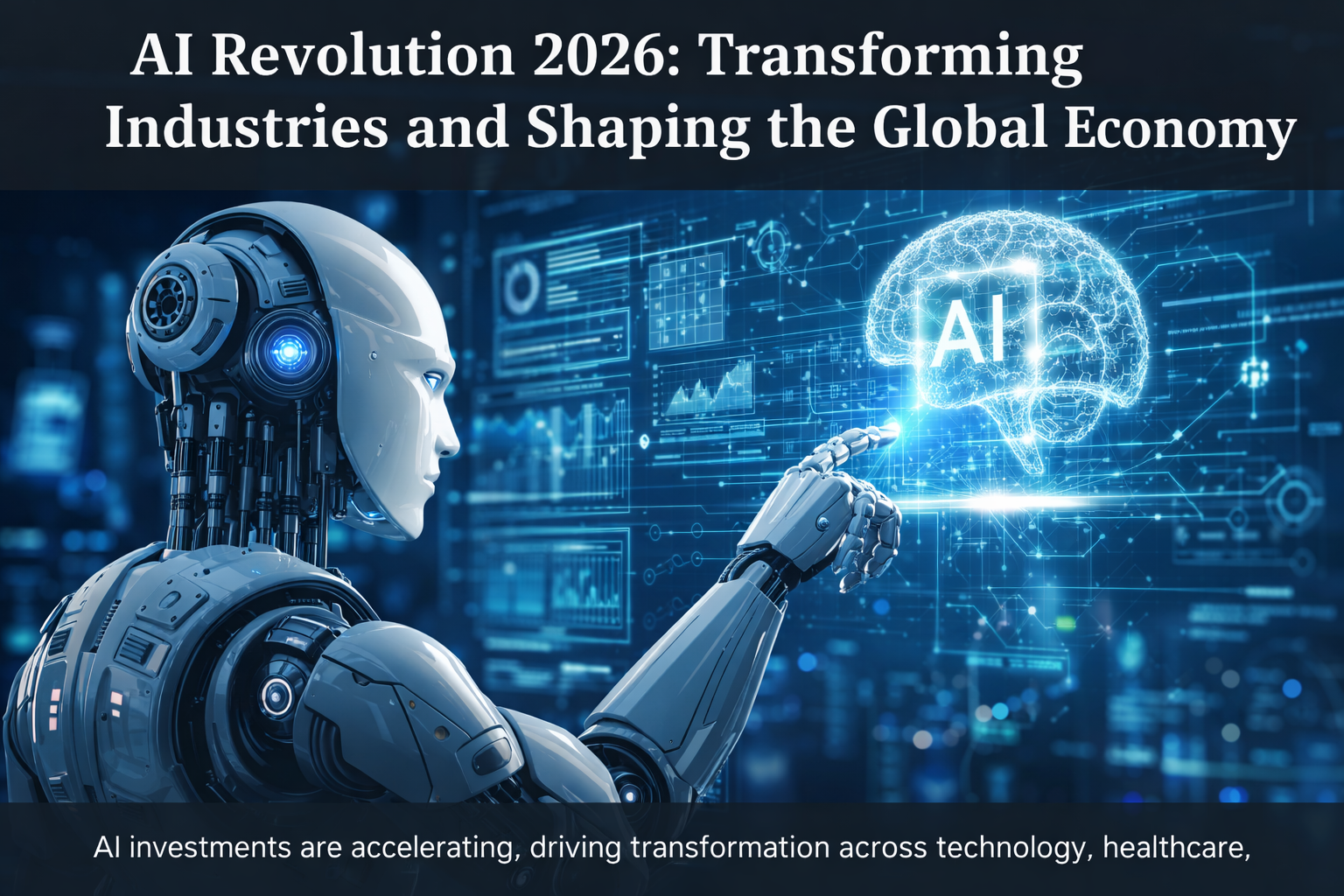
Artificial Intelligence (AI) is rapidly transforming the global technology landscape in 2026, with major companies and startups investing billions of dollars into AI infrastructure, research, and automation technologies.
Over the past year, the demand for AI-powered tools has significantly increased across multiple sectors including healthcare, finance, education, and manufacturing. Businesses are adopting AI to improve productivity, reduce operational costs, and deliver faster services to customers.
Technology giants such as Google, Microsoft, and OpenAI continue to expand their AI capabilities, launching new tools that assist with data analysis, software development, and digital content creation. These innovations are making advanced technology more accessible to businesses and individuals.
Experts believe the AI market could exceed trillions of dollars in the coming years as governments and private organizations continue investing in research and development. Countries around the world are also introducing policies to regulate AI responsibly while encouraging innovation.
However, the rapid rise of AI has also raised concerns about job displacement, data privacy, and ethical use of technology. Policymakers and industry leaders are working together to create guidelines that ensure AI development benefits society while minimizing potential risks.
Despite these challenges, analysts agree that AI will remain one of the most influential technologies shaping the future of the global economy.
As 2026 progresses, experts predict even faster advancements in machine learning, robotics, and automation, marking a new era of digital transformation.